
Sapience Arts Foundation
Where Heritage Lives Forward
Founded in 2025 by Dr. Sumita Misra, IAS, in Panchkula, Haryana, Sapience Arts Foundation brings India's regional artistic traditions into conversation with contemporary expression. It is a partner of the Chandigarh Literature Festival.
Our beginnings
Cultural practitioners and literature enthusiasts established the foundation in Panchkula, drawing on India's folk arts, crafts, and oral histories. Its starting point is Haryana, home to traditions such as Saang, Ragini, and Phag, with a remit that extends across India.
The foundation's presentations identify three gaps in the cultural sector. Arts funding and attention tend to concentrate in metropolitan cities. Practitioners working in languages other than English and Hindi often have fewer routes to national audiences and publishers. Smaller cities need sustained links between artists, schools, institutions, markets, and digital platforms. The foundation brings arts and literature together and uses its founder's experience in public administration to connect institutions with grassroots practitioners.
Vision
- Preserve and create. Keep art, literature, and heritage from across India alive through preservation, new work, and public access.
- Celebrate diversity. Champion cultural expression across regions and languages, especially voices and traditions with limited access to national platforms.
- Inspire imagination. Bring heritage and contemporary expression together to foster a more humane, inclusive, and culturally literate society.
Mission
- Identify, support, and showcase emerging and established artists, writers, poets, and cultural practitioners.
- Curate festivals, literary events, residencies, workshops, and public programmes across literature, crafts, performance, and digital media.
- Document and revive folk and traditional art forms while encouraging contemporary experimentation rooted in India's heritage.
- Work with literary platforms such as the Chandigarh Literature Festival to amplify Indian writing, poetry, and storytelling.
- Build physical and digital platforms connecting creators to audiences, institutions, and markets, particularly in underrepresented regions.
- Develop educational programmes that cultivate critical thinking, aesthetic sensitivity, and cultural literacy among young people and communities.
- Work with institutions, civil society, and government on sustainable support for artistic labour and cultural diversity.
Six pillars of Sapience
- Naad (नाद), performing arts. Meaning primordial sound, Naad encompasses classical music, dance, theatre, and folk performance.
- Vaani (वाणी), literature and poetry. Meaning voice and also a name for Saraswati, Vaani covers festivals, readings, translations, and storytelling.
- Srijan (सृजन), visual arts and crafts. Meaning creation, Srijan includes folk art, contemporary visual arts, crafts, and heritage textiles.
- Pragya (प्रज्ञा), education and outreach. Meaning deep wisdom and insight, Pragya covers school programmes, workshops, educator training, and cultural literacy.
- Prakash (प्रकाश), digital and media. Meaning light, Prakash covers online platforms, documentation, archiving, and digital storytelling.
- Sangam (संगम), partnerships and advocacy. Meaning confluence, Sangam covers institutional collaboration, corporate social responsibility (CSR), government engagement, and policy advocacy.
Founder Director
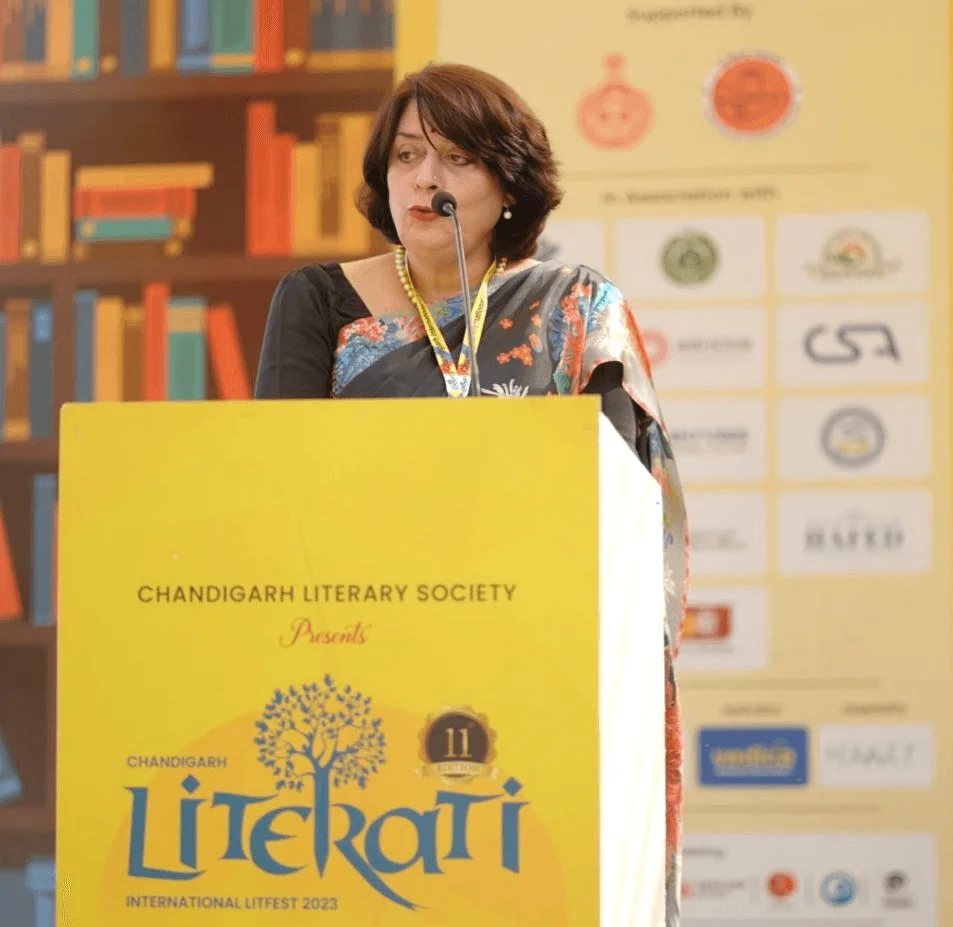
Dr. Misra founded Sapience Arts Foundation to preserve, promote, and reimagine India's artistic traditions. Her experience in public administration and her interest in literature, folk arts, and performance inform her vision of a cultural sector in which every region has a voice and an audience.
Programmes and outreach
Educational outreach
The foundation plans to work with local schools on artist-led workshops and hands-on demonstrations. Artists will connect ancient dance traditions with modern movement, and programmes will help students and educators use the arts for social and cultural exchange across generations.
Curated cultural experiences
The foundation envisages intimate gatherings featuring master artists, performers, writers, poets, and thinkers from India's classical, folk, and literary traditions. It seeks collaborators who share its commitment to artistic quality, cultural depth, and meaningful engagement with audiences.
Chandigarh Literature Festival partnership
- Literary showcases. Present emerging and established writers, poets, and translators to diverse audiences.
- Cross-disciplinary programmes. Bring literature into conversation with music, dance, and visual arts.
- Community access. Make literary programmes accessible to schools, colleges, and underrepresented communities in Haryana and beyond.
Impact and sustainable development
From its base in Panchkula, the foundation aims to connect audiences with classical and folk arts, music, dance, theatre, poetry, crafts, and literature across India. Festivals, residencies, workshops, school programmes, and digital platforms are part of that plan.
- SDG 4 · Quality Education. Cultural literacy, school outreach, and educator programmes.
- SDG 10 · Reduced Inequalities. Greater visibility for underrepresented regions and communities.
- SDG 11 · Sustainable Cities and Communities. Preservation of living heritage and inclusive cultural spaces.
- SDG 17 · Partnerships for the Goals. Collaboration across institutions, civil society, and government.
Viksit Bharat 2047
Looking ahead to the centenary of India's independence, the foundation sees culture contributing to inclusive economic growth through the creative economy, to India's soft power through its living traditions, and to cultural literacy and empathy through education. Its emphasis on underrepresented communities is part of that vision for equitable development.
Roadmap and the way forward
The presentations set out the following roadmap for the foundation.
- 2025, first half. Establish the foundation, assemble the core team, develop the brand, and launch the website and social channels.
- 2025, second half. Plan the first workshop series, bring in partner schools and artists, and hold an inaugural public event in Panchkula.
- 2026. Expand across Haryana and into neighbouring states, launch a digital platform, and pursue government grants and CSR funding.
- 2027 and beyond. Develop annual festivals, artist residencies, and a national network of cultural collaborators.
The plan calls for formal governance and financial systems, recruiting cultural practitioners and administrators, engaging three to five anchor partners, and setting programme goals and collecting feedback. The foundation identifies wider geographic reach, virtual workshops and streamed performances, and sustainable programme funding as ongoing priorities.
Funding and institutional support
- Corporate support. CSR funding and sponsorship for cultural and educational programmes.
- Government grants. Planned applications to the Ministry of Culture, Sangeet Natak Akademi, the Haryana government, and state arts councils.
- Ticketed events. Revenue from curated cultural experiences.
- Residencies and workshops. Fees for residencies, masterclasses, and professional development.
- Institutional partnerships. Fee-based school, college, and cultural collaborations, including curriculum integration.
- Philanthropy. Contributions from individuals, patrons, and diaspora communities.
The foundation's brochure lists 80G, 12A, and CSR registration. Contact the foundation for current documentation and contribution details.
Visual identity and logo concepts
The presentations recommend a six-petal mandala. Each petal represents one programme area, and the mandala represents wholeness and unity. The proposed mark is designed to work across print, event materials, and digital media, in colour or monochrome.
- Option A · Indigo and Gold. A deep indigo centre, gold outlines, and neutral petals.
- Option B · Six Distinct Colours. The recommended design gives each pillar its own colour.
- Option C · Earthy Warmth. Terracotta, ochre, and deep gold drawn from India's heritage.
The palette uses deep indigo for heritage and depth, saffron for warmth, antique gold for craft, and ivory as the base. The six pillar colours are Naad saffron (#E8751A), Vaani indigo (#1B1F5E), Srijan forest green (#2D6A4F), Pragya crimson (#9B1D20), Prakash gold (#C9A84C), and Sangam ivory (#FAF7F0).
The other concepts explored were Deepak (wisdom and enlightenment), Lotus with Devanagari (purity and learning), Veena (arts and Saraswati), Peacock Feather (beauty and India), SA Monogram (a contemporary Indian identity), Book and Flame (literature and enlightenment), Nataraja (performing arts), Lotus Sun (new beginnings), Hamsa Swan (wisdom and grace), Tree of Life (heritage and expression), and Mudra Lotus (connection and creation).
The proposed brand uses jewel tones, elegant typography, and the tagline “Where Heritage Lives Forward.” It calls for carefully produced invitations and programme materials and for stories centred on artists, traditions, and the founder's cultural vision.
Get involved
Attend a performance or workshop, volunteer, or support the foundation through a donation or sponsorship. The foundation welcomes schools, universities, cultural bodies, government institutions, corporate and CSR partners, artists, authors, and curators who want to collaborate on arts, literature, or education programmes.
Internships and fellowships
The foundation invites students and graduates in arts, humanities, literature, journalism, social work, and management to enquire about internships and fellowships. The call describes work in cultural programming, folk arts and oral-history research, communications and digital media, and school and community outreach. It lists hands-on experience, mentorship, a certificate, and a letter of recommendation among the benefits.
Email a CV and a short note on why culture matters to you.
Contact
Source presentations
Read the original presentations for the artwork, logo explorations, and 2026 programme brochure.